
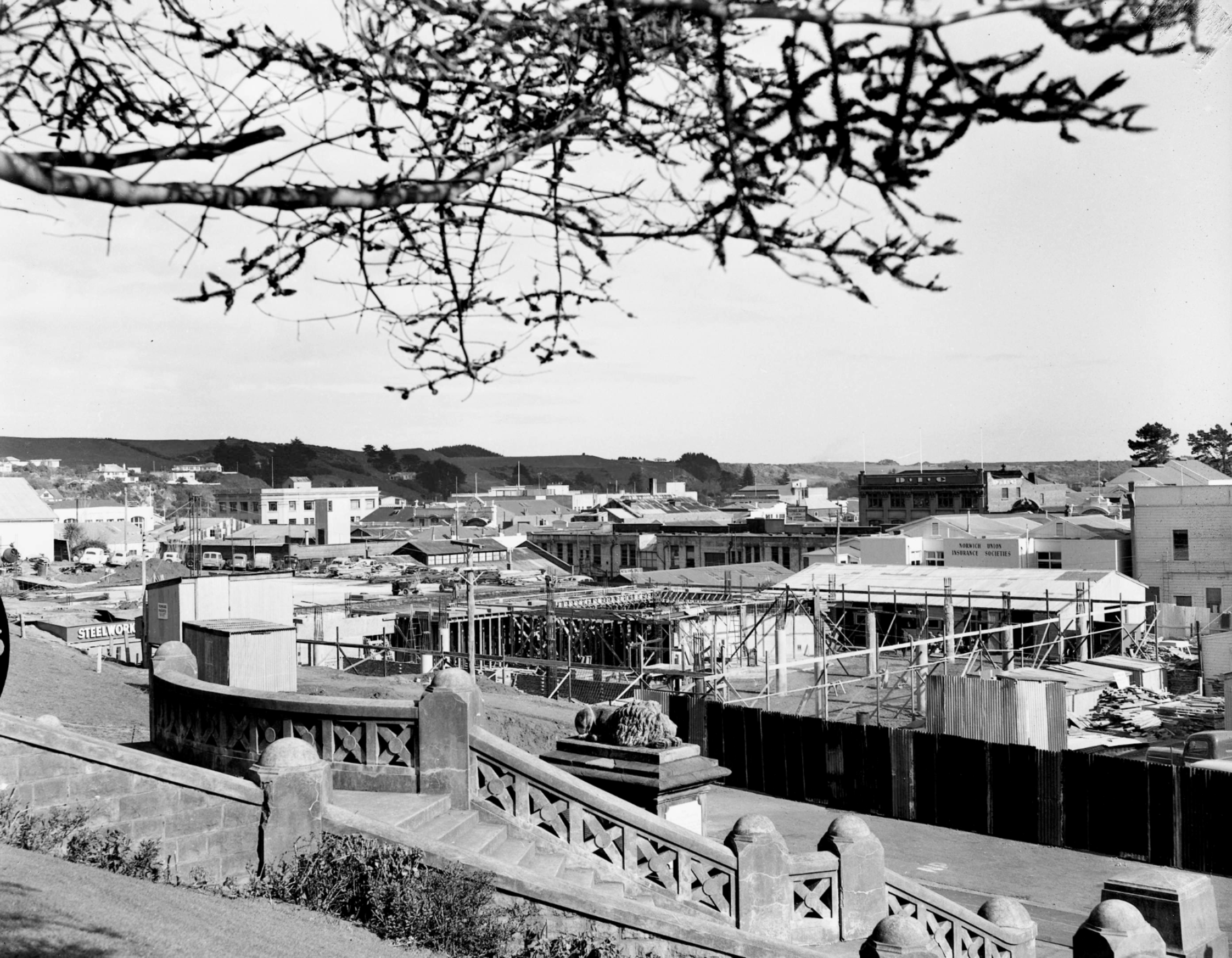
Foundations - The building is well underway on the new Memorial Hall c. 1958.
Photo courtesy of Maxilab/Tesla Collection.
Whanganui War Memorial Centre - History
The Whanganui War Memorial Centre was opened on ANZAC Day - 25th April - 1960 and was constructed as a living memorial to the 375 service men and women from Whanganui who lost their lives during World War II.
The design of the building resulted from a national competition, organised by the New Zealand Institute of Architects in liaison with the Council. The winners were Newman, Smith and Greenhough, New Zealand graduate architects who were based in London at the time.
In 1961, the building design was awarded a gold medal from the NZ Institute of Architects, and received a 25 year award from the Institute in 1997. It is considered to be one of the finest examples of New Zealand modernist architecture, rating in the top 1000 'modernistic' buildings in the world, and the top 50 in the Southern Hemisphere.
Extensive seisemic strengthening work was completed in January 2019. The following year the BSM Group Architects were the winner of the 2020 Western Architecture Awards for the building's complex structural restrengthening that is designed to complement and enhance the existing aesthetic of the building.
Cone Piece (1985) - Matt Pine
This piece of artwork was commissioned by Whanganui heritage champion and architect, Bruce Dickson, who was contracted by the Whanganui District Council for the War Memorial Centre refurbishment. This refurbishment coincided with Whanganui's '60 years a city' celebrations.
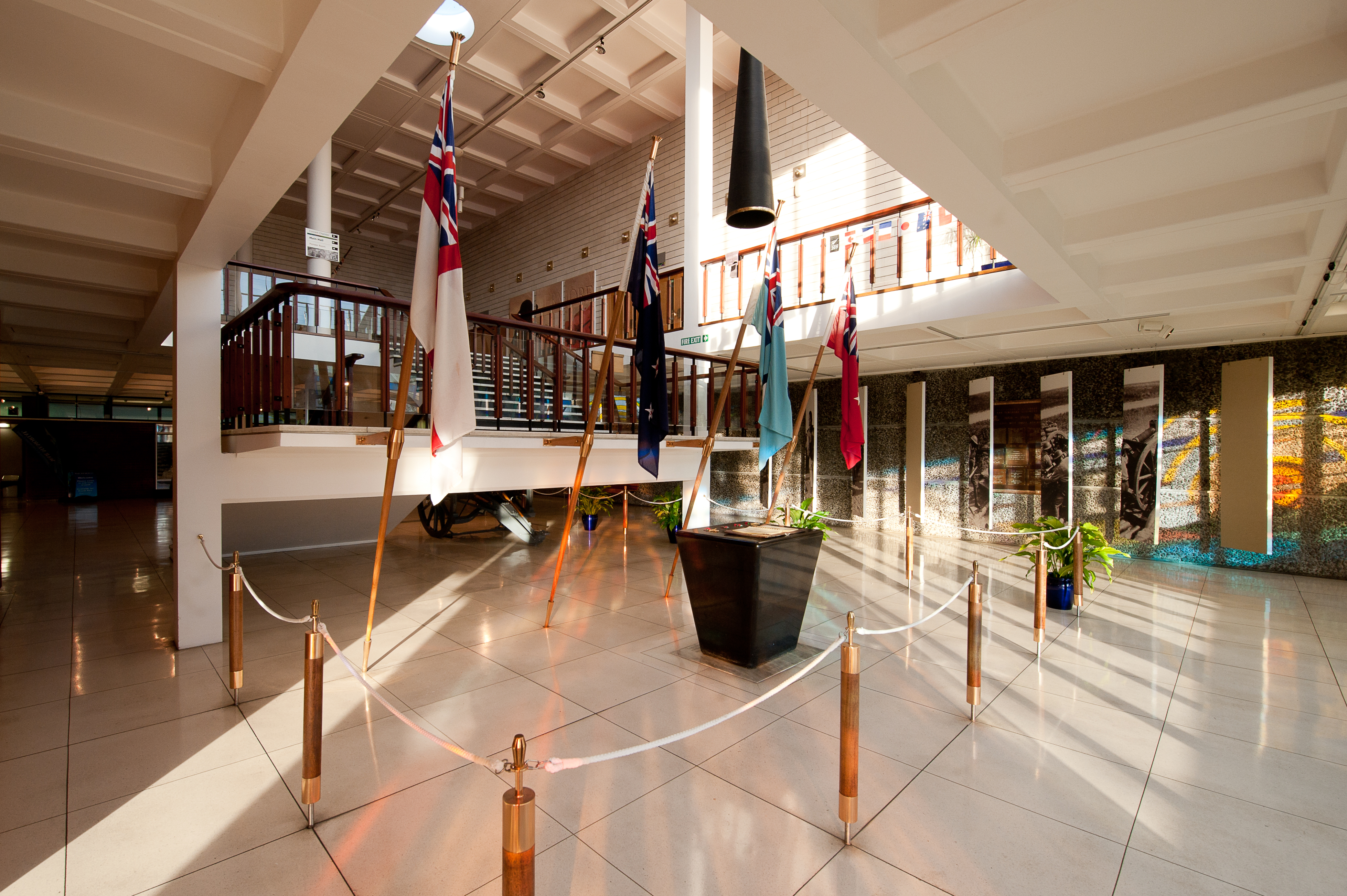
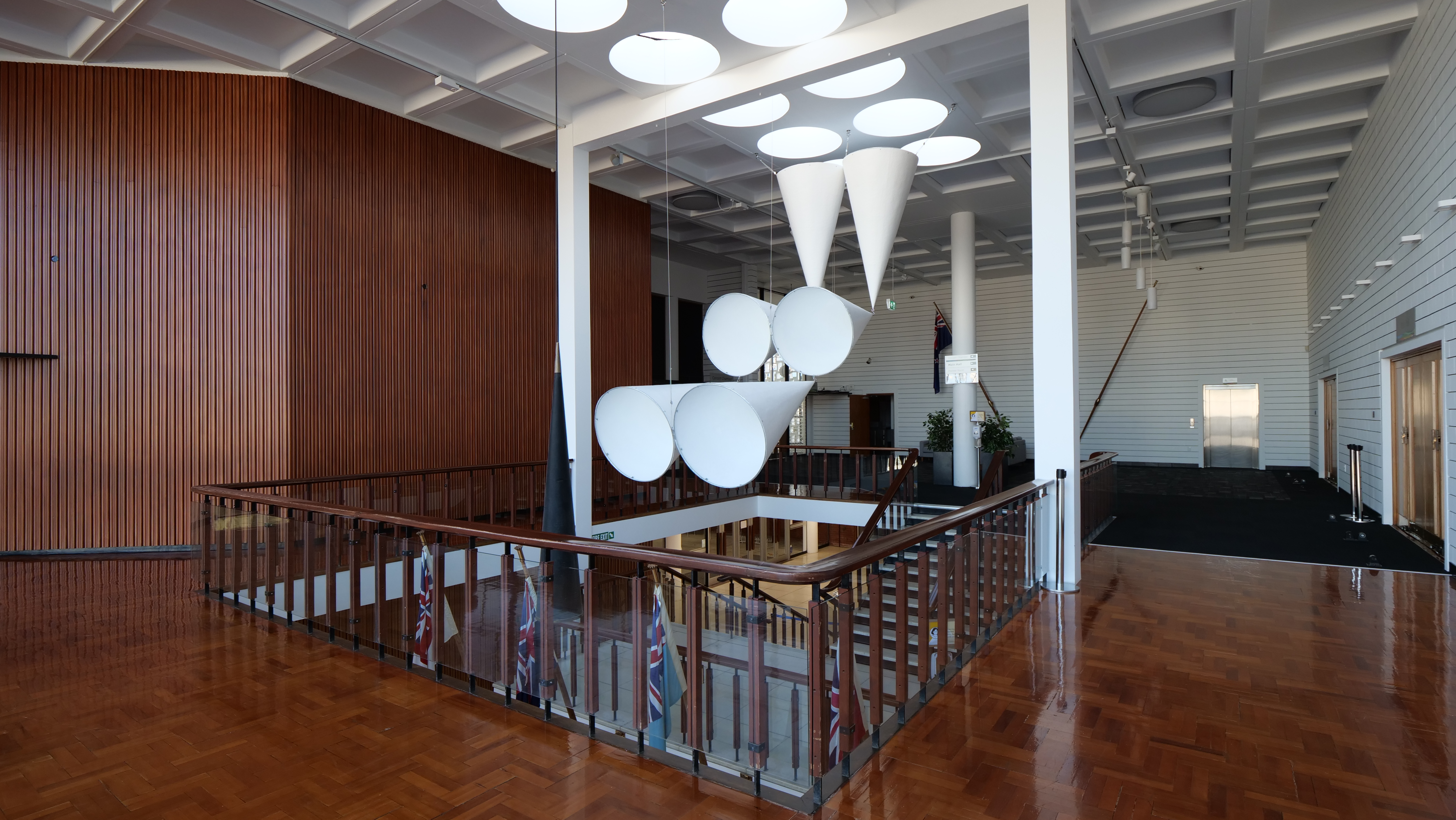
Cone Piece is a rare example of a minimalist, site-specific sculpture. The harmonious design honours the modular geometric forms of modernist architecture and also memorialises the lives lost in World War II. The six fibreglass cones symbolically funnel light from the above light wells to the Book of Remembrance below on the ground floor - mirroring the symbolism of the perpetual light that is part of the original 1960 architecture.
The artwork has a deep personal significance to the artist, Matt Pine, as his father and uncles are listed in the Book of Rememberance.
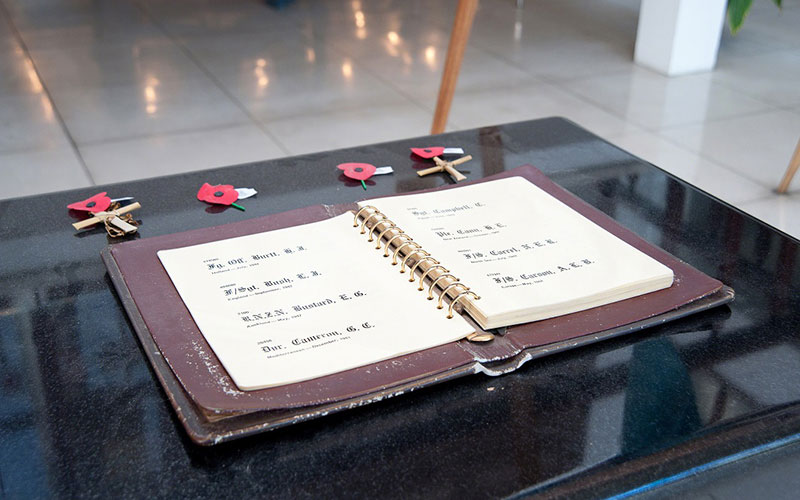
The fallen are remembered in the Book of Remembrance which sits on a podium of Swedish granite in front of the beautiful stained glass window. Above the book fly the flags of the Army, Navy and Air Force along with the New Zealand National Ensign.
RSA Memorial Plaque
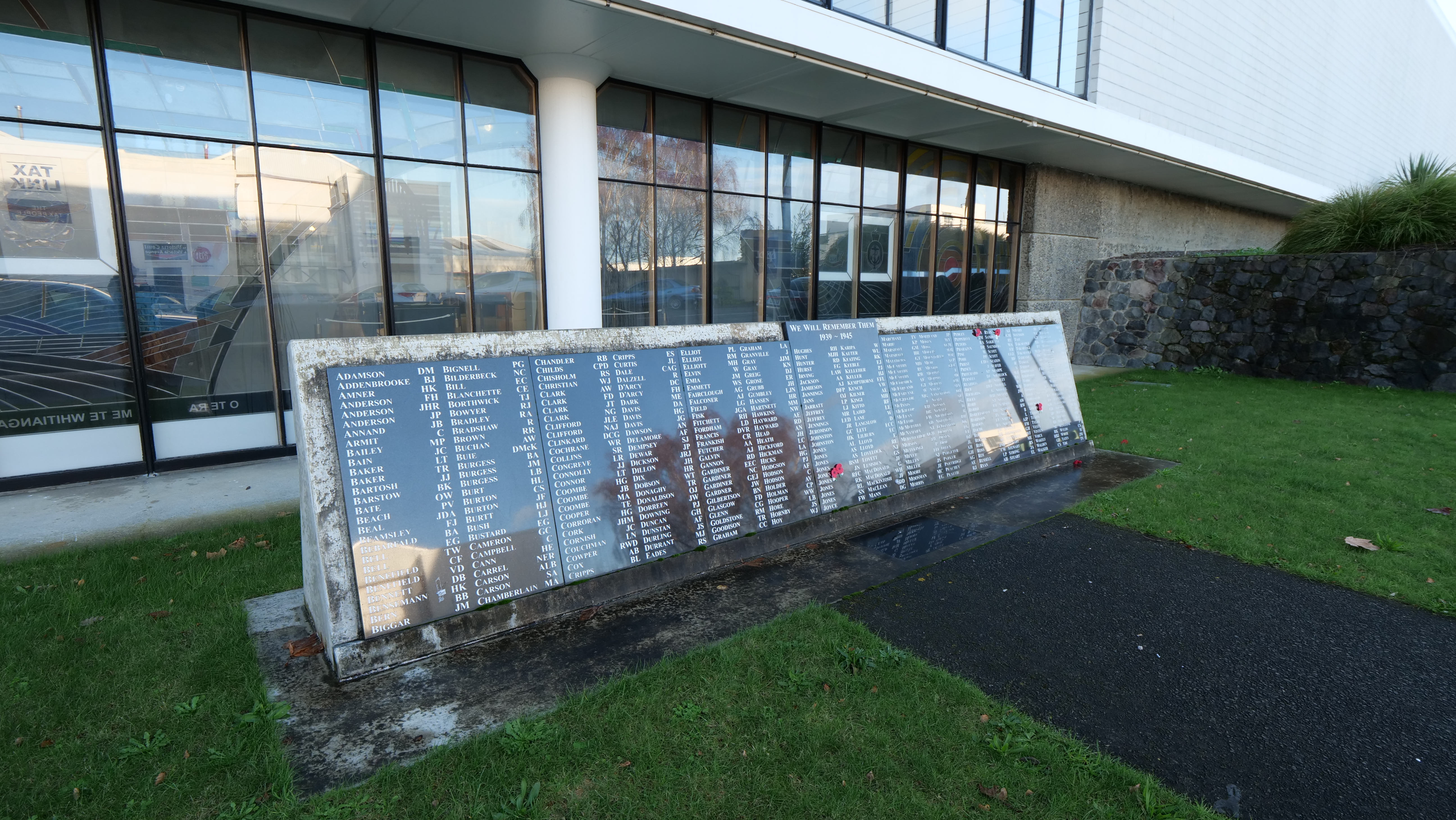
The RSA Memorial Plaque was unveiled on ANZAC Day - 25 April - 2012 as a permanent memorial to the Whanganui soldiers killed in World War II. The project was led by RSA Member Jim Clarke and generously supported by Whanganui businesses. Local architect Eddie Belchambers endorsed the design, material choice and site.
Former Whanganui RSA secretary-manager Bill Campbell refurbished 44 crosses, naming the places where those on the plaques died. These crosses are displayed next to the memorial every Anzac Day period.
Stained Glass Window
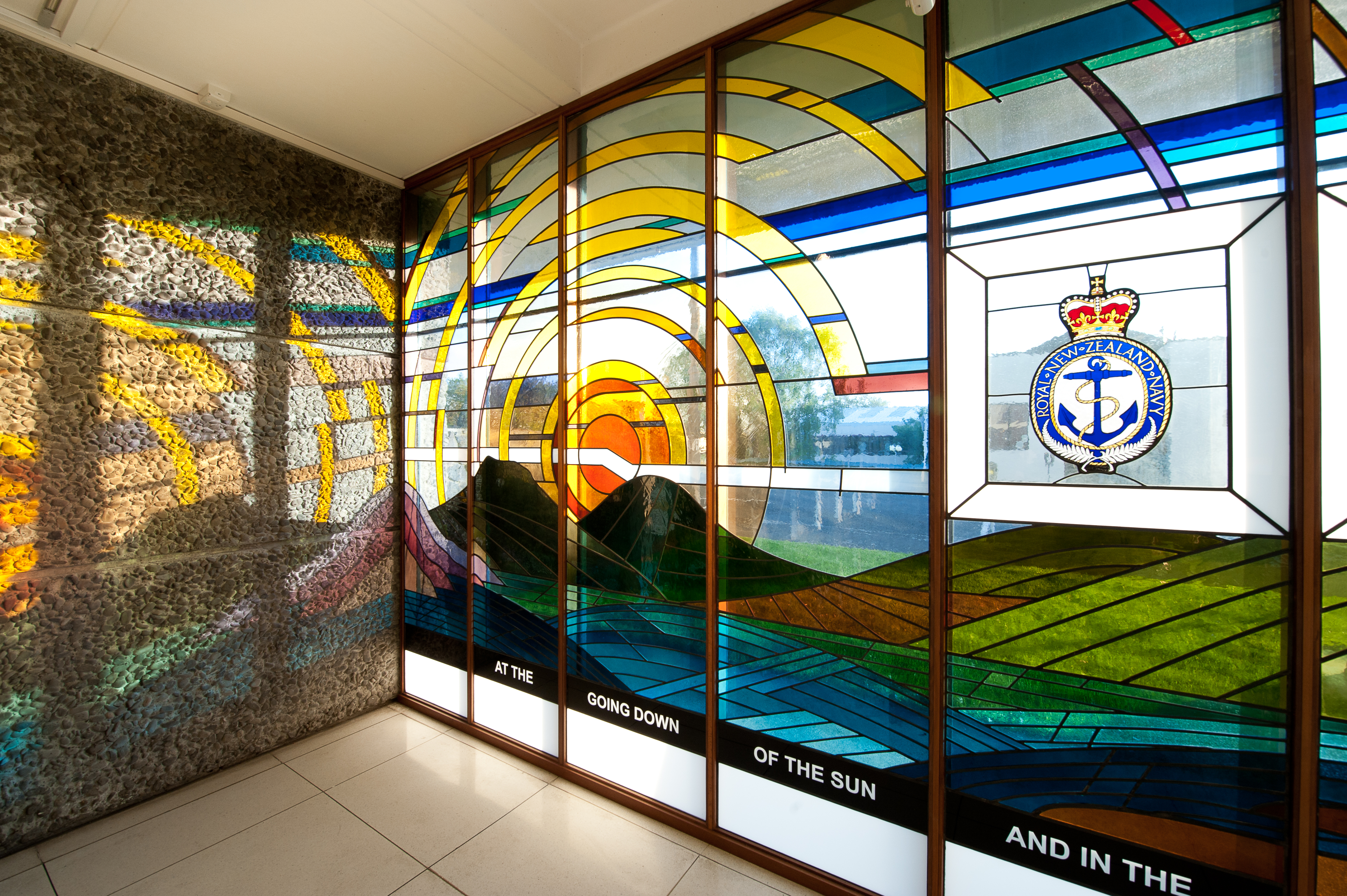
The stained glass window was designed by June Gillies of Levin, New Zealand. The stained glass itself was carved out by Olaf Wehr-Candler and his team in the Pukerua Bay studio. Local artists Carmen Simmonds, Jim Dennison and Dean Flavell collaborated in making the glass castings around the central column in the installation.
The finished product features a simulated sunrise on one side, a clear space in the middle, and a sunset on the other side. Glass castings featuring Flanders poppies decorate the central column. The panels also include the Crests of the New Zealand Armed Forces and the United Nations, together with the following extract, in both English and Maori, from Robert Laurence Binyon's 'Poems for the Fallen':
"AT THE GOING DOWN OF THE SUN AND IN THE MORNING WE WILL REMEMBER THEM.."
Krupp Gun
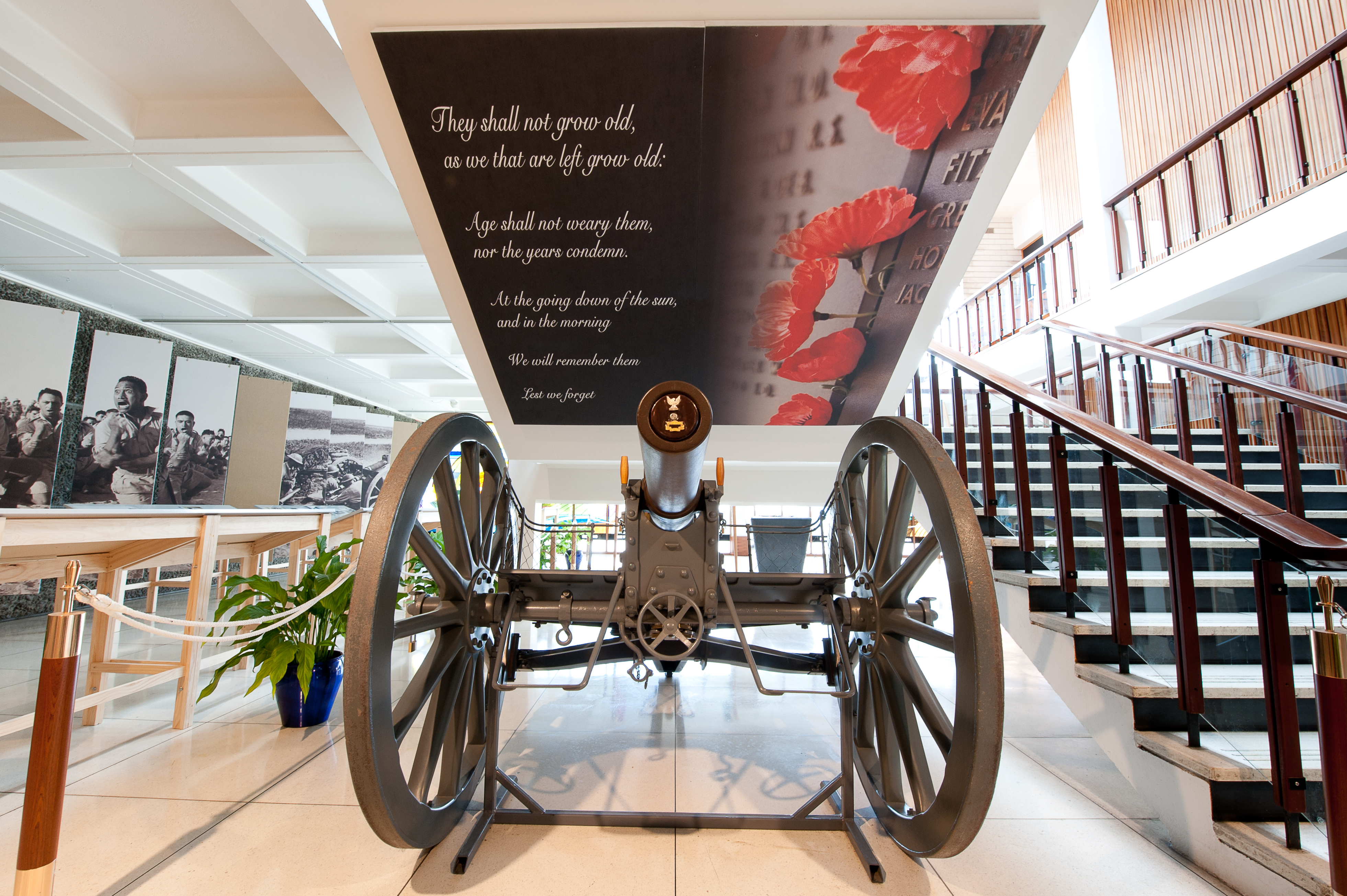
The War Memorial Centre also houses the Krupp Gun, which is the only surviving piece of the South African Boer War artillery left in New Zealand. It is one of only seven of these guns left in the world.
A display board takes you through the history of the journey it took before arriving in the buildng.

Royal Whanganui
Opera House

Whanganui War
Memorial Centre
